

Skin Tags
Skin tags are small, soft growths that hang from the skin on a thin stalk. They are completely harmless, but many people want them removed because they rub against clothes and jewellery or simply because they are visible.
Here you can read about why they appear and how I remove them.
What causes skin tags?
Exactly why skin tags form is not fully known, but they are very common and a few things increase the likelihood:
- Friction: they often appear where skin rubs against skin or clothing – on the neck, in the armpits, under the breasts, in the groin and on the eyelids.
- Hormones: many people get more of them during pregnancy.
- Age and weight: they become more common with age and with excess weight.
- Heredity: if your parents have skin tags, you are more likely to get them too.
What does skin tags look like?
Skin tags are soft and small, from a couple of millimetres up to about a centimetre. They are skin-coloured or slightly darker and are often attached by a narrow stalk. They don't hurt, but can become irritated if they catch on a necklace or collar.
Treating skin tags
I treat skin tags with the following treatments:
Expected results of treatment
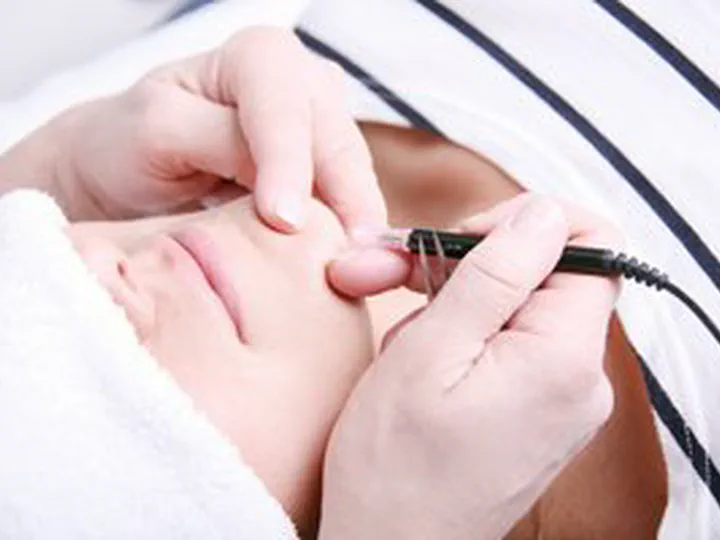
I remove skin tags with diathermy. A fine needle and a weak current make the skin tag dry out and fall off within a few days. It is quick, you can go straight back to your day, and several skin tags can be treated in one visit.
Afterwards there may be slight redness or a small scab that heals on its own. We always look at the skin together first, and if anything looks uncertain I ask you to show it to a doctor before I treat it.
Self-care
- Keep it clean and dry: wash gently and pat dry after showering.
- Leave the scab alone: it falls off by itself once the skin has healed.
- Avoid rubbing: wear soft clothing and skip jewellery over the area for a few days.
- Don't cut them yourself: skin tags bleed easily and can become infected.
When should you see a doctor?
Show a growth to a GP or dermatologist if it grows quickly, changes colour, bleeds for no reason, hurts or doesn't look like an ordinary soft skin tag. If you are unsure whether it is a skin tag, a wart or a mole, it is always better to let a doctor take a look. Read more on 1177.se (Swedish healthcare guide).